Swimmer’s Ear: Recognition, Prevention and Treatment
Summer is almost here which means LOTS of water play for some families. Our family lives between the beach and the pool during summer days and nights. My husband always says I am happiest near the water, a trait that I have definitely passed on to at least some of my children.
With more water play, unfortunately comes an increase in cases of swimmer’s ear. Swimmer’s ear is an infection of the outer ear canal, which is different than a typical “ear infection”, which is an infection behind the ear drum, or tympanic membranes of the ear.
Causes of Swimmer’s Ear
Swimmer’s ear is an infection of the outer ear canal. What causes it? Swimmer’s ear occurs when the canal of the ear traps water and remains moist after swimming. Bacteria loves dark, moist, warm spaces to grow, which is exactly what an ear canal is after swimming. The infection causes inflammation of the ear canal and sometimes drainage from the canal.
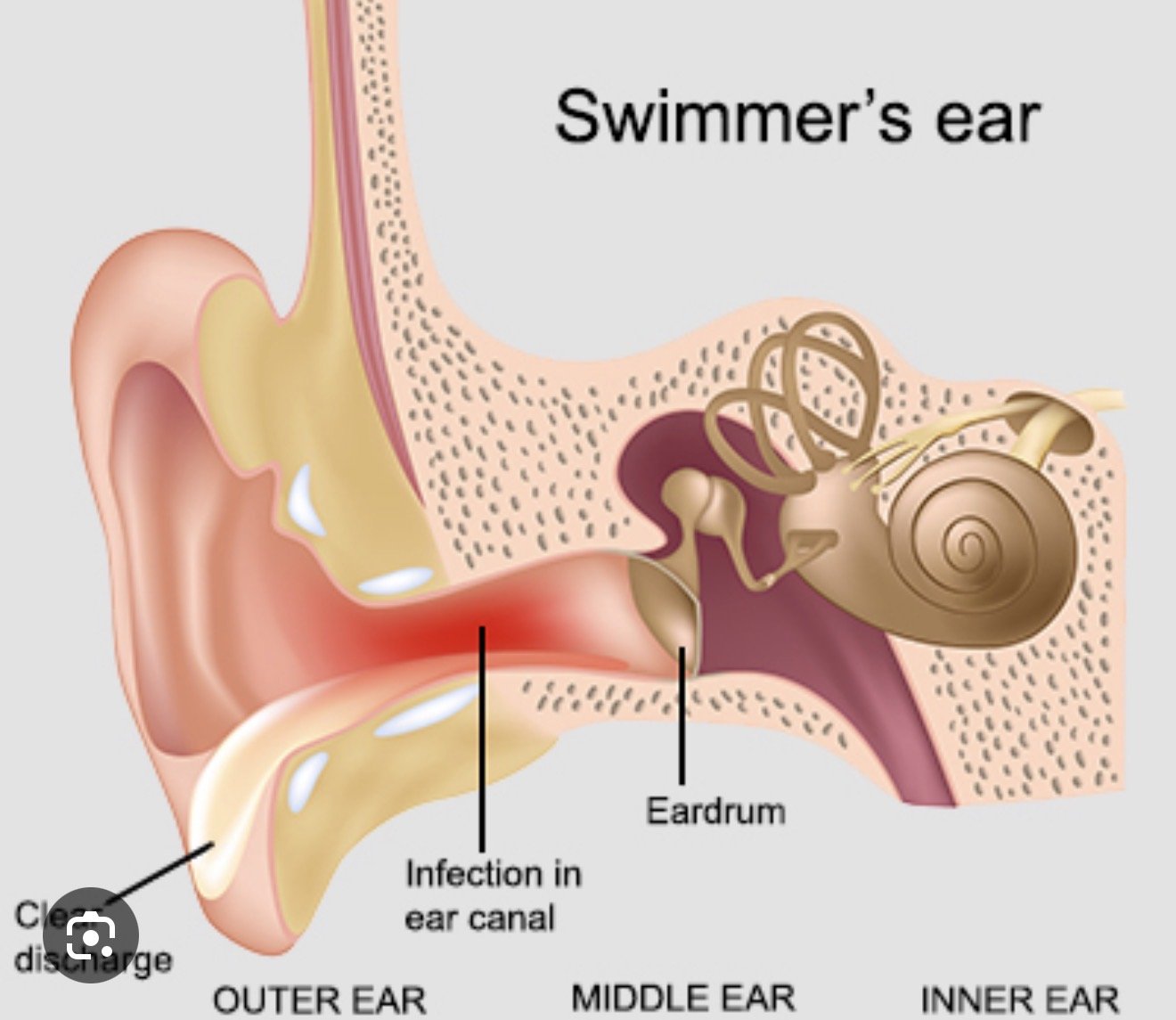

Swimmer’s Ear (outer) vs. Inner Ear Infection Symptoms
While both conditions cause ear pain, swimmer’s ear is marked by pain with manipulation of the ear. When the tragus (see picture below) is pressed on, it causes an increase in pain. A lot of children complain of pain when they lay on the affected ear in bed or when the ear is touched. Drainage (clear or yellow) is also associated with outer ear infections. Fever is not common with outer ear infections.
Inner ear infections are also marked by pain and are often accompanied by fever. Inner ear infections are also known to cause more dizziness and hearing issues than outer ear infections. Drainage is typically only seen with inner ear infections if the ear drum ruptures, then causing it to affect the canal.
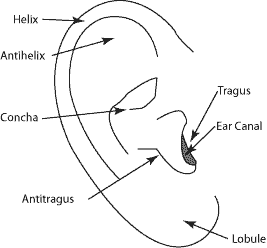
Outer ear anatomy
Prevention
How can you prevent swimmer’s ear this summer while still enjoying the pool and the beach frequently this summer?
Here are some tips:
Keep the ears as dry as possible (I know, yeah right)
Tilt the head side to side after swimming to try and drain water out of the canals
Gently dry the outer ear with a towel
You can use a hair dryer on the lowest setting several inches away from the ear to help evaporate some of the trapped water
Do not put objects into the ear canal
No q-tips, fingers, or hair pins
Any foreign object in the ear canal can scratch the canal and introduce bacteria
Consider ear drying drops
Alcohol based drops help evaporate the water out of the canal
Debrox is a great brand
Can only be used for kids with intact ear drums (not an option for kids with ear tubes)
NOT to be used if drainage is present
Make sure headphones/ear buds are clean
These can further trap moisture in the ear and add to infection risk
Know the symptoms and seek treatment early if pain arises. Early signs include:
Ear itching
Mild ear pain
Feeling of fullness in the ear
Pain when the outer ear is touched
use of over the counter drops to aid in pain relief and drying
Hyland’s makes a great earache drop option
Treatment
Treatment for swimmer’s ear is antibiotic ear drops to kill the bacteria. There are also formulations that have a topical steroid with the antibiotic to decrease the inflammation in the ear canal which is what causes the pain. Though, these options can carry quite the price tag.
Myth: ear plugs while swimming prevents all swimmer’s ear
Actually, ill fitting ear plugs can further trap water in the canal. Also, ear plugs are a foreign object that can introduce bacteria into the ear canal.
Is swimmer’s ear something your family deals with on repeat all summer long? What tricks have you figured out works for your kids?
Check out my Instagram @nuanced_newborns for more information on surviving this summer while keeping your kids happy and healthy!